
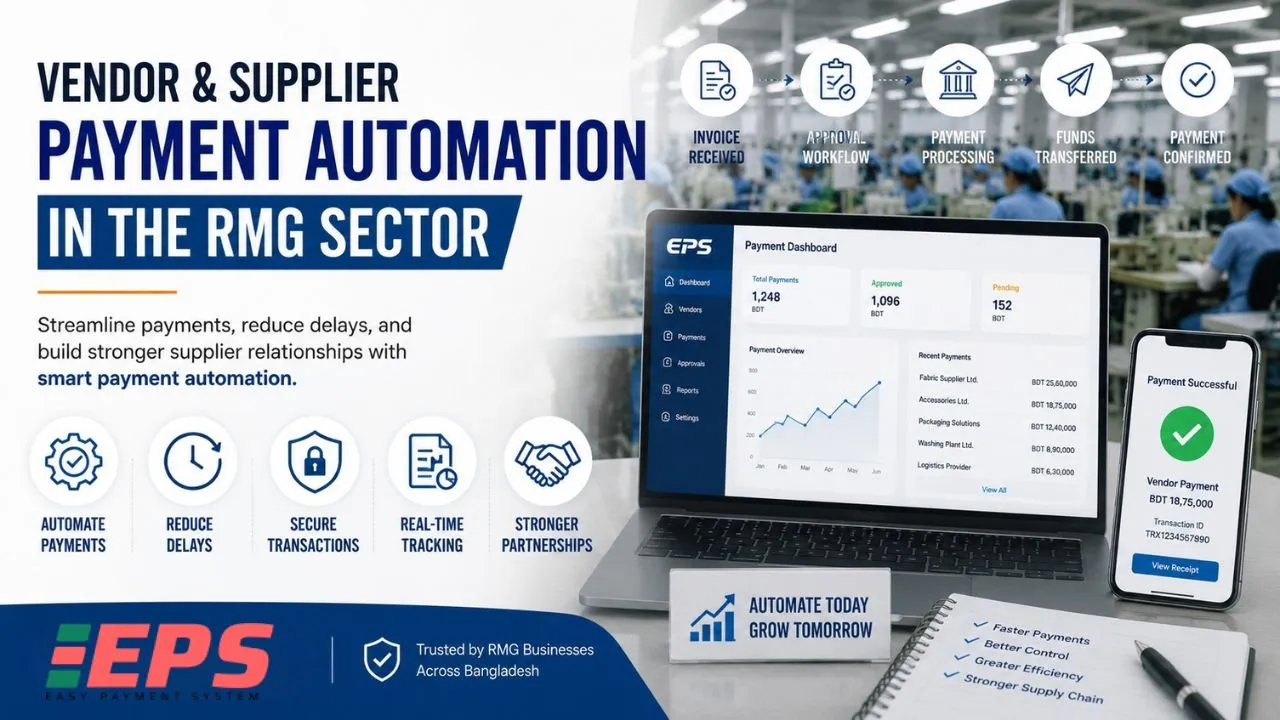
The Ready-Made Garments (RMG) industry is one of the largest contributors to Bangladesh’s economy. Thousands of factories work every day with fabric suppliers, accessories vendors, logistics providers, compliance consultants, washing plants, packaging companies, and other service providers. Behind every export shipment, there is a long chain of payments moving between multiple parties.
Managing these payments manually can create delays, errors, and administrative pressure. Many RMG businesses still rely on spreadsheets, bank transfers performed one by one, paper approvals, and manual reconciliation processes. While these methods may work for a small operation, they become difficult to manage when payment volumes grow.
This is why many manufacturers are now adopting digital payment systems. Through modern RMG payment solutions, businesses can automate vendor and supplier payments while maintaining visibility across every transaction.
For factories handling hundreds of payments every month, automation is becoming a practical business requirement rather than a technology upgrade.
Why Vendor Payment Management Is Challenging in the RMG Industry
An RMG factory deals with a large network of suppliers and service providers; it also needs Secure Bulk Payment Systems. Payments often need to be released according to delivery schedules, purchase orders, invoices, and production milestones.
Common challenges include:
- Delayed invoice approvals
- Duplicate payment entries
- Manual data input errors
- Lost or misplaced payment records
- Difficult reconciliation processes
- Limited visibility across departments
- Delays in supplier settlements
Industry observers estimate that finance teams in medium-sized manufacturing organizations spend between 25% and 40% of their working hours on repetitive payment administration tasks. Much of this time could be reduced through automation.
When payment processes become slow, supplier relationships can suffer. Vendors often depend on predictable cash flow and may prioritize customers who consistently pay on time.
The Cost of Manual Payment Errors
Many business owners focus on payment processing costs but overlook the hidden expenses associated with manual operations.
Common errors include:
Incorrect Payment Amounts
A simple typing mistake can result in overpayments or underpayments. Recovering funds or correcting records often requires additional administrative work.
Duplicate Transactions
When multiple departments handle invoices separately, duplicate payments can occur without proper controls.
Delayed Settlements
Manual approval chains can delay vendor payments by days or even weeks.
Reconciliation Problems
Finance teams frequently spend hours matching bank statements against payment records.
Compliance Risks
Missing documentation may create difficulties during audits or financial reviews.
According to various business process studies, manual payment errors can increase operational costs by 3% to 5% annually in organizations handling large transaction volumes.
What Is Vendor and Supplier Payment Automation?
Payment automation refers to the use of digital systems to manage payment workflows from invoice approval to final settlement.
Instead of manually processing every transaction, businesses can create structured workflows that handle repetitive tasks automatically.
A typical automated process includes:
- Invoice submission
- Verification against purchase orders
- Internal approval routing
- Payment scheduling
- Fund transfer execution
- Real-time notification
- Transaction recording
- Reporting and reconciliation
This reduces dependency on manual intervention while maintaining full transaction visibility.
Many organizations implementing RMG Industry Payment Gateway Solutions in Bangladesh are using automation to manage supplier ecosystems more effectively.
Benefits of Payment Automation for RMG Businesses
Faster Supplier Payments
Suppliers appreciate predictable payment cycles.
When invoices are approved digitally and payments are scheduled automatically, vendors receive funds without unnecessary delays.
This helps strengthen business relationships and supports smoother procurement operations.
Better Cash Flow Visibility
Finance teams gain a clear overview of:
- Pending payments
- Scheduled payments
- Completed transactions
- Outstanding liabilities
This visibility helps management make informed financial decisions.
Reduced Administrative Work
Manual processing often involves:
- Data entry
- Invoice matching
- Email approvals
- Bank transfer execution
- Reporting
Automation reduces repetitive work and allows finance teams to focus on higher-value activities.
Improved Accuracy
Automated systems reduce human errors that commonly occur during manual processing.
Payment details can be pulled directly from approved invoices, reducing data entry mistakes.
Stronger Audit Readiness
Every transaction creates a digital record.
Businesses can quickly access:
- Approval history
- Payment records
- Invoice copies
- Settlement details
This simplifies internal audits and compliance reviews.
Supporting Large Vendor Networks
A large garment factory may work with hundreds of vendors simultaneously.
These may include:
- Fabric suppliers
- Thread suppliers
- Packaging companies
- Transportation providers
- Freight forwarders
- Washing units
- Printing vendors
- Compliance service providers
Managing such a network manually becomes increasingly difficult as production volume grows.
An automated payment platform allows businesses to organize vendor data, monitor payment schedules, and maintain consistent settlement processes across the supply chain.
This is one reason many organizations are searching for a reliable payment gateway for RMG Industry in Bangladesh that supports business payment workflows.
The Role of Real-Time Payment Tracking
Visibility is one of the most important advantages of payment automation.
Real-time tracking allows businesses to:
- Monitor payment status instantly
- Identify pending approvals
- Review completed transactions
- Track settlement timelines
- Generate financial reports
Without centralized tracking, businesses often rely on email chains and spreadsheets to determine payment status.
A centralized dashboard gives finance teams immediate access to current payment information.
Mobile Banking and Digital Payment Integration
The financial ecosystem in Bangladesh has changed significantly during the past decade.
Businesses now use:
- Mobile financial services
- Internet banking
- Corporate banking portals
- Card-based payment systems
Modern payment automation platforms can connect these channels into a single workflow.
This allows suppliers to receive funds through their preferred payment method while maintaining accurate transaction records.
For many manufacturers, selecting a trusted payment gateway system in Bangladesh helps reduce operational friction and improve payment efficiency.
Improving Supplier Relationships Through Faster Settlements
Vendor relationships are a critical part of garment manufacturing.
Suppliers often prioritize clients who:
- Pay on time
- Maintain clear communication
- Provide transaction transparency
- Follow agreed payment schedules
Late payments can create tension and affect supply chain reliability.
When payments are automated, suppliers gain confidence in the process because they receive predictable settlements and payment confirmations.
This contributes to stronger long-term partnerships.
How Payment Automation Supports Business Growth
As factories expand, transaction volumes increase.
A business processing 50 supplier payments per month today may process 500 payments per month within a few years.
Manual processes that work at a smaller scale often become difficult to manage during growth phases.
Automation helps businesses:
- Handle larger transaction volumes
- Reduce operational bottlenecks
- Improve reporting accuracy
- Maintain payment consistency
- Support multi-location operations
Organizations looking for a practical payment solution for garments in Bangladesh are increasingly focusing on automation because it supports both operational control and business expansion.
Choosing the Right Payment Partner
Before implementing a payment automation solution, businesses should evaluate:
Security Standards
Financial data must be protected through secure systems and controlled access.
Integration Capability
The platform should connect with existing ERP, accounting, and operational systems.
Reporting Features
Detailed transaction reporting supports better financial management.
Payment Flexibility
Support for banks, cards, and mobile financial services is important.
Customer Support
Payment operations often require timely assistance when issues arise.
A suitable payment partner should understand the unique requirements of manufacturing businesses and supply chain operations.
Final Thoughts
Vendor and supplier payments are a critical part of daily operations in the RMG sector. Delays, manual errors, and fragmented processes can affect supplier relationships, increase administrative costs, and create unnecessary financial risks.
Payment automation provides a structured way to manage transactions with greater accuracy and visibility. By reducing manual work and improving payment tracking, factories can maintain stronger supplier relationships while giving finance teams better control over cash flow.
As Bangladesh's garment industry continues to grow, businesses that adopt digital payment processes will be better positioned to manage increasing transaction volumes, maintain operational discipline, and support long-term business success. For many manufacturers, modern payment automation is becoming a practical step toward more reliable financial operations.