
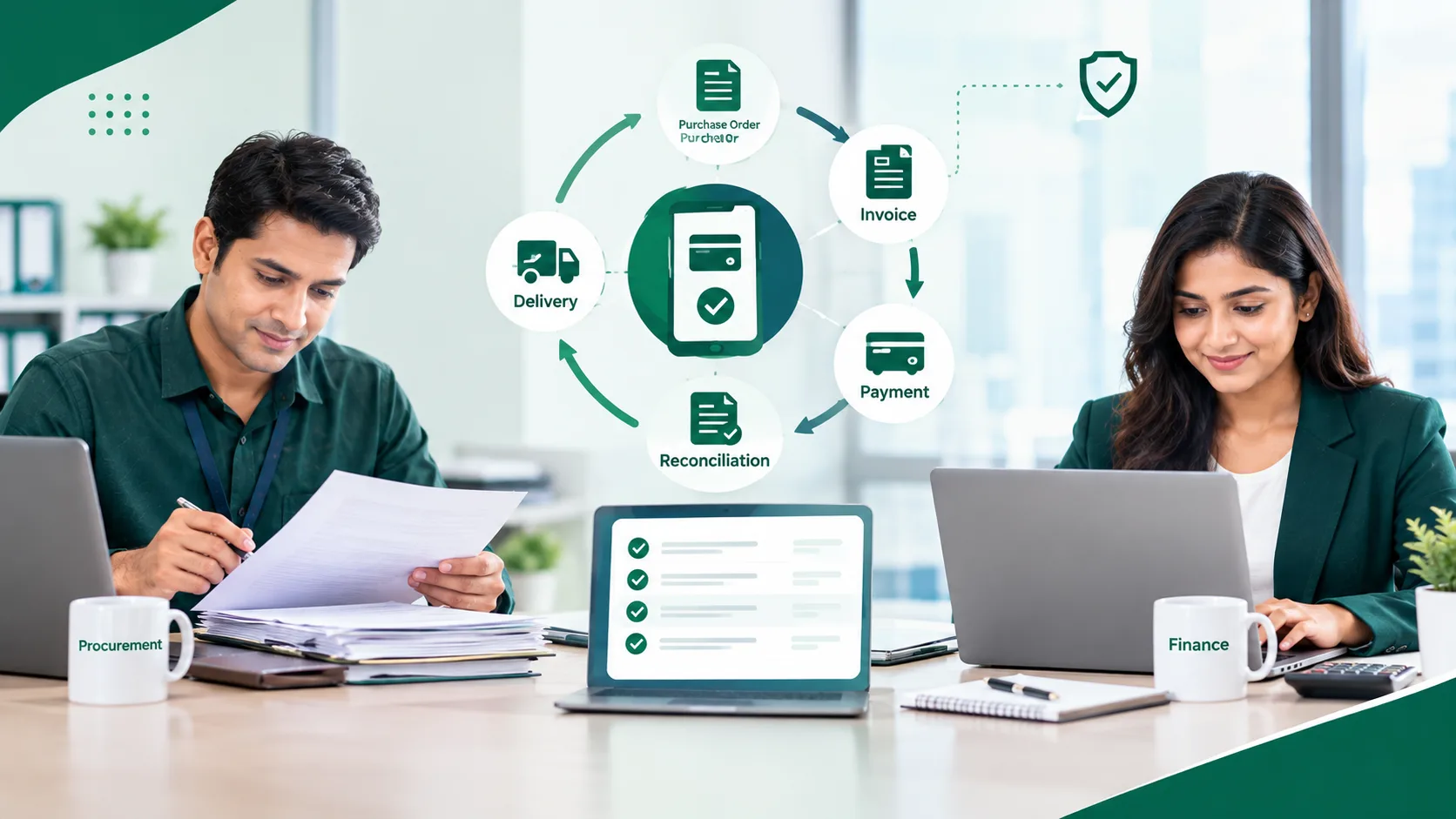
Procurement and finance teams are closely connected when it comes to business payments. Procurement handles purchase orders, suppliers, invoices, and delivery records, while finance reviews payment requests, releases funds, records expenses, and checks financial statements. When these two teams work with separate records, even a simple supplier payment can create confusion.
A digital payment process can make transaction information easier to record and review. Businesses using an online payment gateway in Bangladesh can maintain digital transaction details that help finance teams compare payment records with invoices and approved purchases.
The main purpose of payment reconciliation is simple: the business should be able to confirm that the right supplier was paid the right amount for an approved purchase. This requires cooperation between procurement and finance, along with clear records for every transaction.
What Is Digital Payment Reconciliation?
Digital payment reconciliation is the process of comparing payment transactions with the documents and records connected to those payments.
For a supplier transaction, this can involve checking:
- Purchase order
- Supplier invoice
- Delivery or service confirmation
- Approved payment amount
- Payment transaction
- Accounting entry
- Bank or settlement record
For example, a company may issue a purchase order for ৳300,000. The supplier sends an invoice for ৳300,000, the goods are received, and finance releases the payment. During reconciliation, the team checks whether all these records agree.
If the payment record shows ৳280,000 while the invoice shows ৳300,000, the difference needs to be investigated. It could be a partial payment, deduction, adjustment, or recording mistake.
Why Procurement and Finance Need the Same Payment Information
Procurement and finance may have different responsibilities, but both teams need accurate transaction information.
Procurement needs to know whether a supplier has been paid. Finance needs to know why the payment was made and whether the amount was approved.
Without a shared process, businesses can face problems such as:
- Duplicate supplier payments
- Incorrect payment amounts
- Missing invoices
- Unmatched purchase orders
- Delayed supplier settlements
- Unclear payment status
- Repeated requests for transaction information
These issues can become harder to manage as transaction volume increases.
For example, a business processing 500 supplier invoices every month may have only a small number of transactions requiring manual investigation. Yet if each unresolved case takes 15–20 minutes to review, the accumulated staff time can become substantial.
The figures above are illustrative examples, not industry statistics.
1. Create a Standard Reconciliation Process
The first step is to define what procurement and finance should check before and after a payment.
A basic process can look like this:
Purchase Order → Invoice → Delivery Confirmation → Approval → Payment → Reconciliation
Procurement verifies the purchase and supplier information. The receiving team confirms the goods or services. Finance checks the invoice and approval before processing payment. After payment, the transaction is matched with the relevant records.
This structure gives each department a clear responsibility.
Businesses should also decide how exceptions will be handled. Partial deliveries, advance payments, invoice corrections, credit notes, and disputed invoices should have separate procedures.
2. Match Purchase Orders With Supplier Invoices
Invoice matching is one of the main parts of payment reconciliation.
Suppose a company orders 200 units at ৳1,500 per unit. The purchase order shows a total value of ৳300,000. The supplier invoice should be checked against the agreed quantity and price.
If the invoice shows 220 units, procurement should confirm whether the additional quantity was approved. Finance should not rely only on the invoice amount when releasing the payment.
This type of checking can identify:
- Incorrect quantities
- Price differences
- Unauthorized purchases
- Duplicate invoices
- Incorrect supplier details
- Missing purchase orders
For larger businesses, having a consistent invoice reference makes this process easier.
3. Maintain a Central Payment Register
A central payment register gives procurement and finance a common reference point.
The register can contain:
|
Information |
Purpose |
|
Supplier name |
Identifies the payee |
|
Purchase order number |
Connects payment with procurement |
|
Invoice number |
Identifies the supplier bill |
|
Approved amount |
Shows the authorized value |
|
Transaction reference |
Identifies the digital payment |
|
Payment date |
Records when payment was processed |
|
Payment status |
Shows completed, pending, or failed |
|
Reconciliation status |
Shows whether records match |
This information does not need to be complicated. The main objective is to give authorized staff a consistent record to review.
A business processing 1,000 supplier transactions in a month could use this register to identify unresolved payments without searching through separate spreadsheets.
4. Track Payment Status Clearly
A payment request can move through several stages.
For example:
Pending Approval → Approved → Processing → Completed → Reconciled
Some transactions may fail or remain pending. Those records should be clearly marked so that staff do not treat them as completed payments.
Clear status tracking also helps procurement respond to supplier questions. Instead of asking finance to manually search for every payment, procurement can refer to the transaction reference and current status.
This is particularly useful when suppliers have different payment schedules or when a business handles a large number of invoices each month.
5. Set Clear Responsibilities Between Teams
Payment reconciliation works better when each department knows exactly what it is responsible for.
Procurement Team
Procurement can be responsible for:
- Supplier information
- Purchase order details
- Purchase approval
- Goods or service confirmation
- Invoice submission
Finance Team
Finance can handle:
- Invoice verification
- Payment approval
- Payment processing
- Accounting records
- Bank or settlement reconciliation
Management
Management can review:
- Large-value transactions
- Outstanding payments
- Unresolved discrepancies
- Supplier payment trends
- Exceptions requiring approval
Clear roles reduce repeated work and make it easier to identify where a payment issue occurred.
6. Use Digital Payment Records for Faster Reconciliation
Paper-based payment records can make transaction searches difficult. Digital records provide searchable information such as payment date, amount, transaction reference, and status.
Businesses should review the reporting features available through their payment setup. When considering the best payment gateway Bangladesh option, companies should look beyond payment acceptance and review transaction reporting, settlement information, support, and integration requirements.
The payment system should fit the company's procurement and finance workflow rather than operate as a separate process.
7. Reconcile Payments on a Regular Schedule
Businesses do not need to wait until the end of the month to identify payment differences.
A regular reconciliation schedule can be based on transaction volume.
For example:
- Daily: Review high-volume payment activity
- Weekly: Check pending and failed supplier payments
- Monthly: Match payment records with accounting and bank records
- Quarterly: Review recurring reconciliation issues
Regular checks make it easier to investigate discrepancies while the related invoice and procurement information is still readily available.
A company can also create an exception list containing transactions that require additional review.
8. Review the Role of Payment Service Providers
The payment provider is one part of the overall reconciliation process. Procurement and finance teams still need internal controls for purchase approval, invoice verification, and accounting.
When selecting a payment gateway service provider in Bangladesh, businesses should review transaction reporting, settlement procedures, supported payment channels, integration options, and customer support. The provider should be able to supply the transaction information required for the company's reconciliation process.
Companies should also consider whether an easy payment system in Bangladesh fits their supplier and internal payment requirements.
For businesses that use several payment channels, online payment methods in Bangladesh should be reviewed based on transaction volume, supplier requirements, reporting needs, and existing financial systems.
9. Handle International Supplier Payments Separately
International supplier payments may involve additional records compared with domestic transactions.
Finance teams may need to review:
- Currency
- Exchange rate
- Bank charges
- Settlement date
- Supplier country
- Payment reference
- Supporting documents
An international payment gateway in Bangladesh may be relevant for certain cross-border payment requirements. Businesses should first confirm supported currencies, transaction types, settlement arrangements, and eligibility.
International transactions should have clear documentation so that procurement and finance can identify the exact supplier obligation connected with each payment.
10. Use Reconciliation Data to Find Repeated Problems
Payment reconciliation is not only about checking whether transactions match. The records can also show where payment problems occur repeatedly.
Finance managers can review:
- Number of invoice mismatches
- Duplicate payment attempts
- Failed transactions
- Pending payments
- Missing documents
- Average resolution time
- Unreconciled transaction value
For example, if 30 out of 700 monthly supplier payments require additional investigation, the business can review why those cases occur.
Perhaps most problems come from incomplete purchase orders, incorrect supplier account details, or invoice amounts that do not match approved purchases.
These figures are illustrative and should be replaced with the company's own records when used for internal reporting.
How EPS Bangladesh Can Support Procurement Payment Requirements
A business payment process should connect payment activity with the company's wider financial workflow. Procurement teams need clear supplier and purchase information, while finance teams need reliable transaction records for payment verification and accounting.
Businesses can review procurement payment gateway solutions in Bangladesh from EPS Bangladesh to understand payment options relevant to procurement-related requirements.
Before choosing a payment solution, companies should document their existing workflow and identify where reconciliation takes the most time. They should also determine which transaction information finance needs for accounting and which information procurement needs for supplier communication.
Building a Better Procurement-Finance Payment Workflow
Digital payment reconciliation becomes easier when both teams use consistent references, follow the same approval rules, and maintain accurate transaction records.
A practical workflow can be built around five basic stages:
- Procurement approval — Confirm the purchase and supplier.
- Invoice verification — Match the invoice with the purchase.
- Payment approval — Confirm the amount and supporting documents.
- Digital payment — Process and record the transaction.
- Reconciliation — Match the payment with procurement and finance records.
Businesses can start with a simple payment register and regular reconciliation schedule. Once the basic process is working, they can review system integration and reporting options according to their transaction volume.
A well-organized reconciliation process gives procurement and finance teams a common view of payment activity. It also helps businesses identify discrepancies, answer supplier questions, maintain accounting records, and keep better control over business spending.